In the Pharaohs’ Laboratory
Millions of people travel to Cairo to marvel at the treasures of ancient Egypt. Yet the most fascinating part of the Grand Egyptian Museum remains hidden from most visitors. Deep beneath the exhibition halls, international research teams are working to preserve millennia-old cultural artifacts for the future. That is exactly where one of our laboratories is located.
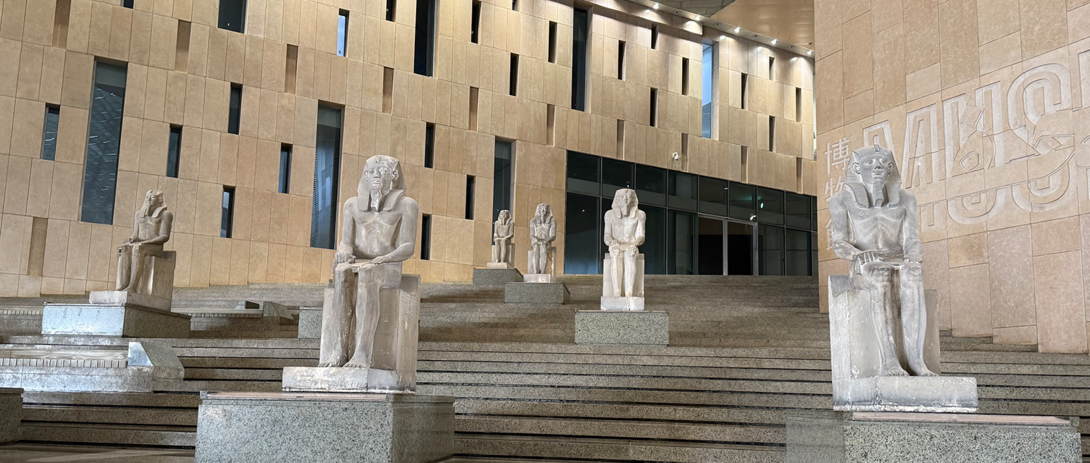
Anyone visiting the Grand Egyptian Museum in Cairo can hardly stop marveling. Even the first glimpse of the monumental building against the backdrop of the Pyramids of Giza makes it clear: something extraordinary has been created here. After many years of planning and construction, one of the world’s largest archaeological museums has finally opened its doors—and has been delighting visitors from all over the world ever since.
More than 50,000 exhibits here tell the story of ancient Egypt. Among them are world�famous treasures such as the nearly complete burial goods of Tutankhamun. But the museum is far more than just a place to marvel. Behind the exhibition spaces lies a state-of-the-art research and restoration center—an area that most visitors never get to see.
Where the past has a future
At the Conservation Center, experts from a wide range of disciplines work to examine, restore, and permanently preserve unique cultural artifacts. Mummies, millennia-old textiles, papyrus scrolls, wooden objects, metals, and monumental stone sculptures— each object presents its own unique challenges for research and conservation. To make this work possible, state-of-the-art laboratories are needed that enable precise scientific work while meeting the highest safety and quality standards. This is precisely where our laboratory equipment plays a key role. Spanning two floors, we created a laboratory area with a project volume of approximately 2.5 million euros—equipment that meets the high demands of one of the world’s most important research centers. The fact that one of our laboratories is located in a place where work is carried out daily on relics spanning up to 10,000 years of human history makes this project something very special to us.
A museum with an extraordinary history
Many years passed before the Grand Egyptian Museum was able to open its doors. The sheer scale of the project, political developments, and other challenges repeatedly caused delays. Today, it is regarded not only as Egypt’s new landmark but also as one of the world’s most modern centers for archaeological research and restoration. Here, new scientific insights are gained, and here, delicate artifacts are preserved for future generations— often long before they find their place in an exhibition.
Modern laboratories for millennia-old treasures
Archaeological research today is high-tech. Before restoration work begins or exhibits are displayed, scientists analyze materials, document the condition of the objects, and develop customized conservation plans. This process often generates fine dust that must be captured directly at the workstation. For this reason, the laboratory is equipped with a large number of fume hoods and local exhaust systems integrated along the workstations to ensure a safe working environment. Across numerous meters of laboratory space, researchers have access to optimally equipped and highly flexible workstations—designed for a wide variety of restoration and analysis tasks. The dimensions of the objects being worked on are also reflected in the equipment. Rolling tables with a load capacity of approximately 2,000 kg make it possible to safely move and work on even massive stone sarcophagi. Our laboratories thus create the conditions for precise work—functional, safe, and durable. They form the foundation that ensures research and restoration can take place under optimal conditions.
Technology that preserves history
When millions of people walk through the halls of the Grand Egyptian Museum, the impressive treasures of ancient Egypt take center stage. Behind the scenes, however, work is carried out day after day to preserve this unique cultural heritage. After all, our modern laboratories not only contribute to research and innovation - sometimes they also help preserve history for the future.