
Sustainability and Environment

AS A FAMILY-OWNED BUSINESS, WE THINK LONG-TERM
OUR APPROACH TO THE CLIMATE, RESOURCES, AND SOCIETY
Thinking long-term means that we systematically address the impact of our business activities on the environment, society, and the economy—from climate protection and energy consumption to resource use and supply chains, as well as working conditions and responsible corporate governance.

Total Emissions
DE

Value-added
emissions

Emissions from
product use

Net-Zero
Target Year
Five key areas describe what we are working on. A two-pronged materiality analysis—conducted proactively and in accordance with ESRS guidelines, even though there is no legal reporting requirement—has identified which sustainability issues are truly relevant to us and our stakeholders.

“We're just getting started, and we still have a long way to go, but together we can and will overcome this challenge.”
Felix Kresser, Sustainability Coordinator for the WALDNER GroupThe 4G concept is the benchmark we use to evaluate decisions in these areas. As the WALDNER Group’s sustainability guiding principle, it brings together four perspectives: beneficial for our customers, green for our planet, healthy for people, and profitable for the company.
Decisions often have an impact on the environment, people, customers, and the company all at once. That is why we do not view sustainability in isolation, but rather from various perspectives. This framework helps us balance environmental, social, and economic aspects and develop solutions that are sustainable in the long term.
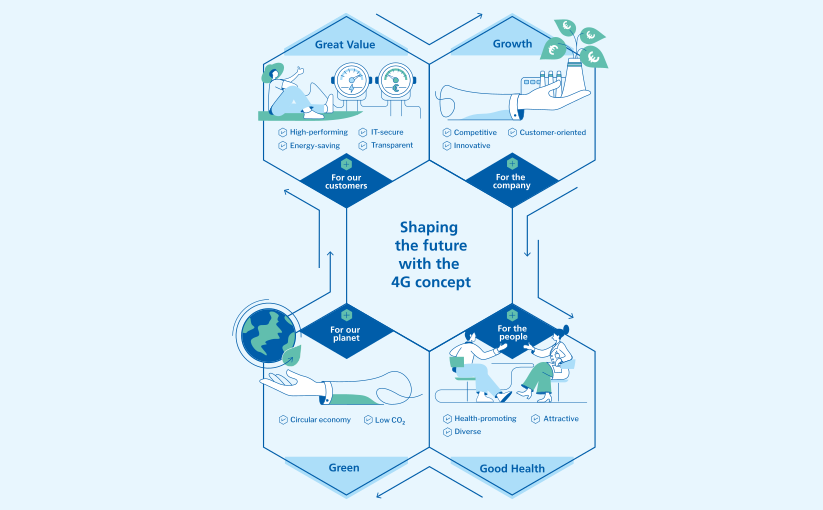
Our products are designed to deliver high performance while maintaining economical life-cycle costs. We focus on energy efficiency, IT security, and transparency throughout the entire product life cycle. This makes sustainability a tangible reality—for example, when a laboratory fume hood consumes significantly less energy during operation.
We are systematically reducing our greenhouse gas emissions, both in our direct operations and throughout the entire value chain. Our goal is to achieve net-zero by 2045. This means that we will avoid emissions to the extent that is technically and economically feasible and offset any remaining emissions that cannot currently be avoided.
We create safe, healthy, and attractive working conditions. Health promotion, fair career opportunities, and respectful collaboration are central elements of our #oneWALDNER corporate culture. At the same time, we take responsibility for the safety of the end users of our products.
For us, sustainability is not a cost factor, but a competitive advantage. Innovation, customer satisfaction, and a strong brand are the foundation for long-term economic success, for the benefit of our shareholders, employees, and the region.
For us, transparency is a key component of a responsible approach to sustainability issues. That is why we provide information on our goals, measures, and progress in our Sustainability Report.
The report offers insights into topics such as climate and energy, resource efficiency and the circular economy, supply chains, employees, as well as compliance and corporate governance.
In addition to the report, we provide our guidelines and codes of conduct, as well as certificates from independent testing agencies, for download.
Our corporate policy outlines the fundamental principles and goals that guide our actions. It provides a framework for issues such as quality, the environment, energy, occupational safety, and responsible corporate governance, and serves as a guide for employees, customers, and business partners.
A responsible supply chain requires shared standards. In this document, we outline our expectations of our business partners in areas such as human rights, working conditions, the environment, integrity, and responsible corporate governance.
In addition to the Code of Conduct, our Supplier Guidelines define specific requirements and framework conditions for our collaboration. They promote transparency and support the consistent implementation of relevant quality, environmental, and sustainability requirements.
ISO 14001 helps us systematically identify environmental aspects and integrate environmental objectives into our business processes.
Through our energy management system, we track energy consumption in a structured manner and identify opportunities to improve energy efficiency.
For our wood-based materials, we rely primarily on PEFC-certified wood. The certification confirms that the wood comes from PEFC-certified forests and ensures traceability throughout the supply chain.
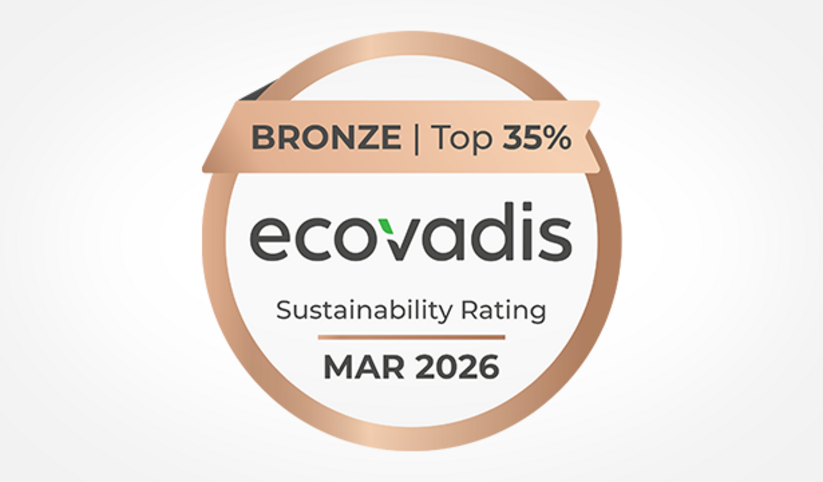
EcoVadis evaluates companies in the areas of the environment, labor and human rights, ethics, and sustainable procurement. The results help us identify our strengths and areas for improvement and systematically advance our activities.
For the scope of implementation, maintenance, operation, and service management of IT and OT.
For the areas of sales, development/engineering, project planning, etc.
For the areas of development, design, procurement, etc.
For the areas of sales, development, design, production, shipping, installation, and service of laboratory equipment.
This could also be interesting for you


